
Safe Water Engineering and Planet Detroit have launched a first-of-its-kind map showing every Michigan water system’s lead service line inventory and replacement progress.
Ever since I worked with Dr. Mona Hanna to expose the harm of the Flint Water Crisis in 2015, I’ve focused my career on helping water utilities and communities understand their risk of lead in drinking water—and take action to reduce it. Knowing where lead service lines are, having accurate sampling data, and communicating clearly with the public are all critical pieces of the puzzle.
I participated in the stakeholder process that revised the Michigan Lead and Copper Rule in 2018, which established the first proactive requirements in the country to identify and replace lead service lines. Today, we are able to see and track the results of those efforts.
I’m excited to share the Michigan Lead Service Line Tracker that Safe Water Engineering created with Planet Detroit. Using data reported by water utilities to the Michigan Department of Environment, Great Lakes, and Energy (EGLE), we’ve mapped lead service line inventories and replacement progress statewide and made them accessible so residents can check the status of their own water system.
Service lines are the small pipes that connect your home or building to the water main in the street, delivering water every time you turn on the tap.
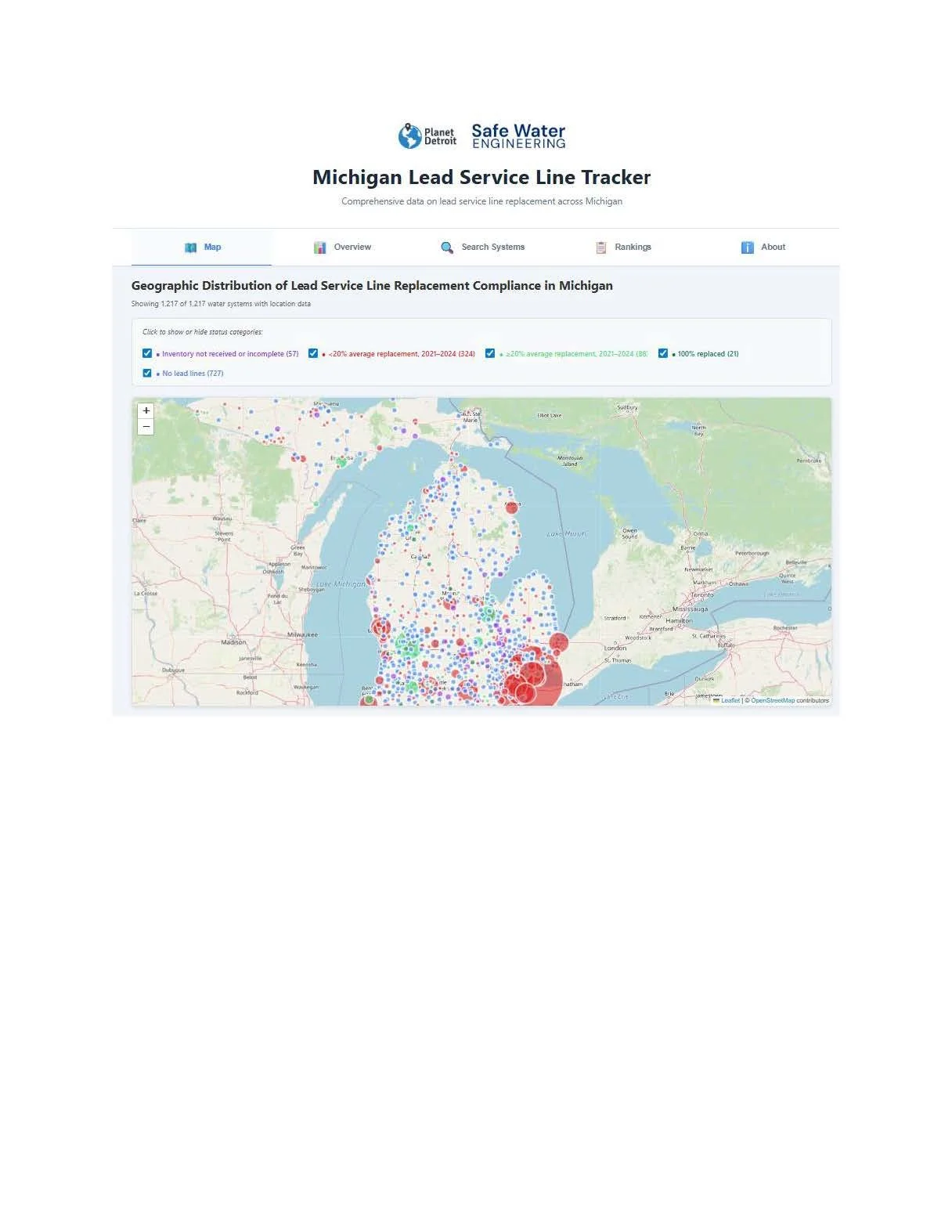
Click the link to explore the map at your own pace. You can:
Explore the map,
Search individual water systems,
Compare rankings such as Most Lead Lines, Best Progress, Needs Attention, and Most Unknown Lines.
Read how we analyzed the data on the “About” page.
We’ve also created a Guide to the Michigan Lead Service Line Tracker which explains:
Lead and Copper Rule requirements,
Health effects of lead exposure,
How to advocate for faster replacement in your community, and
What to do if your plumbing and or tap water contains lead.
This launch comes at the same time that customers across the country are receiving their annual letters from water utilities informing them if their service lines are lead, galvanized, or unknown. We encourage you to use this moment to learn more about your own risk and steps you can take to protect your home and community.
As a rule of thumb: the older your home, the higher the likelihood of lead in your plumbing. I recommend a certified lead-reducing filter for anyone with a lead service line and for anyone whose plumbing hasn’t been fully replaced since 2014.
Planet Detroit and Safe Water Engineering have been working together for years to help educate Michiganders on lead in water. Here are a few if you’re looking to explore deeper:
What you need to know: Detroit’s water safe, but lead pipes remain a risk
Michigan’s new lead rule for drinking water is six years old. How are we doing?
I hope this tool empowers you to understand your risk, take action, and advocate for a lead-free future in your community.