
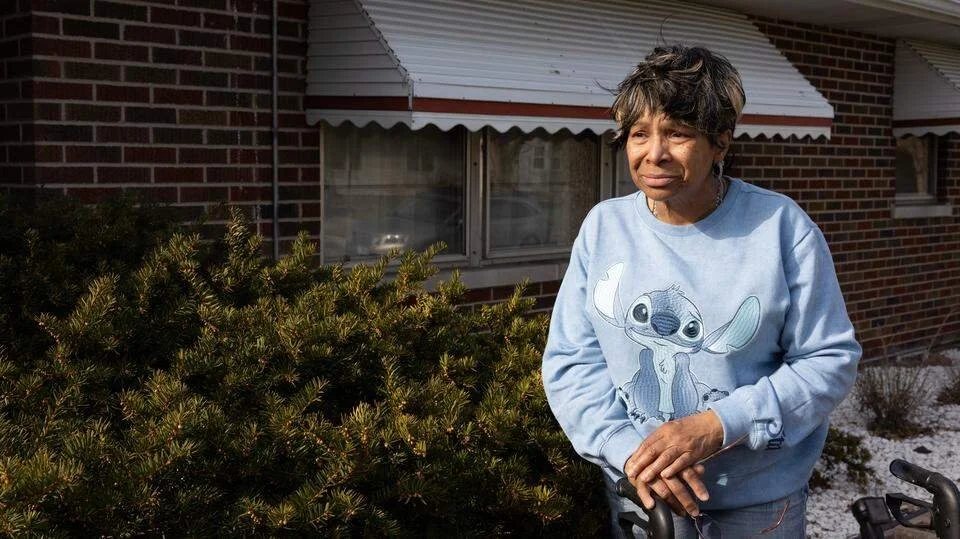
Standing in front of her home for the past 32 years, Yvette Lyles reflects on new findings from community-organized testing that found E. coli in the drinking water in Cahokia Heights. Testing participants, including Lyles, collected water samples from their kitchen sinks over seven months, from June to December. Joshua Carter, Belleville News-Democrat
By Lexi Cortes, Janelle O’Dea and Lacretia Wimbley for Belleville News-Democrat
Cahokia Heights residents have found E. coli in their drinking water through community-organized testing of samples from kitchen taps. The results raise new questions about infrastructure in a community plagued by sewage spills and flooding.
Elin Betanzo consulted with the community to design their sampling program and was interviewed for this article.
Excerpt:
Their data showed a total of 118 water samples were collected from 23 homes over seven months, from June to December. Of those samples, 26 tested positive for total coliforms, a group of bacteria common in the environment. Regulators say they are generally not harmful, but their presence signals a potential problem with equipment or treatment systems. It requires additional testing under state and federal regulations to check for E. coli bacteria, which is an indication that water may be contaminated with feces. E. coli was detected in eight of the community water samples.
“I helped uncover the Flint water crisis, and we had more than enough data there to prove that the water wasn’t safe, but the authorities still dismissed us, and then we had to prove that children were being harmed for the authorities to finally recognize us and take action,” Betanzo added. “In this case, I really hope we’re past that.”